
Read our stories:

Meet Kini Adjo:
Kini Adjo is a farmer and rice seller in the village of Kpoguéré, southern Togo.
Before receiving her improved cookstove, Kini cooked over a traditional three-stone fire, burning 35 to 55 pieces of wood a day. Gathering enough fuel meant several wood-collection trips a week, each taking four to five hours, and the smoke often left her with irritated eyes and coughing.
Since receiving the new stove, Kini now uses just five to ten pieces of wood per session. She spends far less time collecting wood, and her health has improved, as the coughing and eye irritation caused by smoke have largely disappeared.
With the time saved, Kini can now cook larger quantities of rice to sell, instead of cutting cooking short to gather firewood.

Meet ATSE Adjovi:
Adjovi is a farmer and mother living in the Anyron community, where Deki recently rehabilitated the local borehole.
For years, Adjovi and her family relied on a nearby river for water, walking at least 5 kilometres each day, an exhausting journey that took a toll on her health and her time, and left little energy for farming. Waterborne illnesses like stomach pains and diarrhoea were a constant worry in her household.
Today, everything has changed. With a borehole now less than 0.5 km from home, safe water is quick and easy to reach. The illnesses that once affected her family have disappeared, and the time and energy she's gained have allowed her to put more heart into farming and supporting her family.
Safe water has brought something else, too, a real sense of empowerment among the women in her village. Through the Mother Club and WASH trainings, Adjovi has grown in confidence, gained valuable new skills, and found a stronger voice in her community. As she puts it, simply and beautifully, safe water "means being healthy."
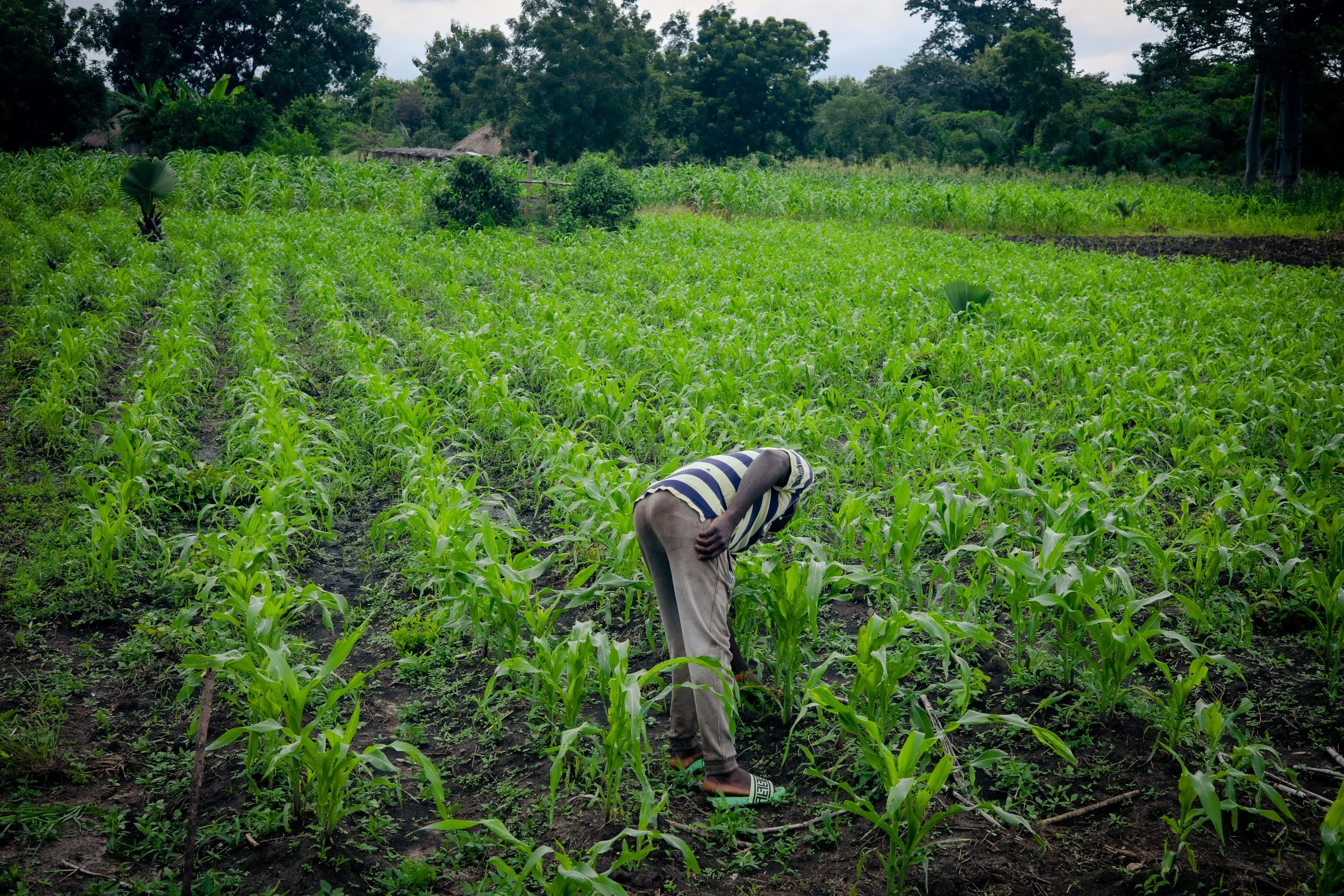
Meet the ASSILASSIME DE KAREKOPE cooperative:
Our regenerative farming cooperative, ASSILASSIME DE KAREKOPE, has been piloting our new biochar programme. At harvest, the collective ran a side-by-side comparison between a maize plot treated with biochar and an identical control plot, same size, same conditions, managed the traditional, chemically treated way.
The results were striking. The biochar plot produced 59 kg of maize compared to 40.52 kg from the control, a yield increase of about 45.6%, or roughly 944 kg versus 648 kg per hectare.
The difference showed visually too. As the season wore on, the control plot's foliage turned sparse and yellowing, while the biochar-treated plot stayed dense and green much longer, producing noticeably bigger, fuller cobs at harvest.
This is one comparison from one growing cycle, and the team are keen to repeat it across more field schools and seasons before drawing firm conclusions. Still, as a first quantified signal that biochar is making a real difference to farmers' soil, it's a strong, impactful start.